Bosnia's Džeko Tandem Hold-Up Play Shapes 2026 Group Phase Strategy
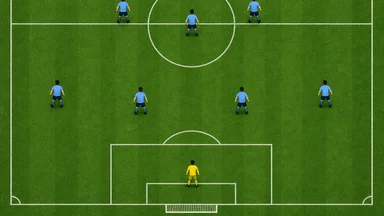
When Bosnia and Herzegovina step onto the pitch for their 2026 World Cup opener, all eyes will be on Edin Džeko. At 39, the country's all-time top scorer is no longer the marauding forward who once led the line for Manchester City and Roma. Instead, manager Sergej Barbarez has reinvented him as a deep-lying target man, the fulcrum of a 4-4-2 diamond that relies on hold-up play to unlock defences. The strategy is not without risk—Džeko's age limits his pressing capacity—but early evidence from qualifying suggests it could be Bosnia's best route out of Group F.
Džeko's Dual Role: Target Man as Second Striker
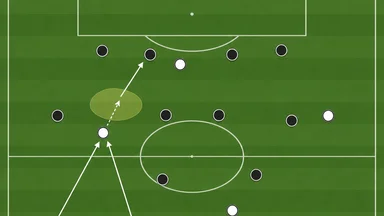
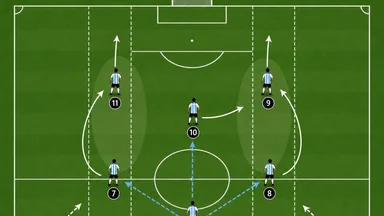
Barbarez deploys Džeko as a target man who drops into the space between midfield and defence, inviting pressure before releasing quicker runners. In Bosnia's 4-4-2 diamond, Džeko often starts as the deeper of the two forwards, receiving the ball with his back to goal and using his 6-foot-4 frame to shield possession. From there, he can turn and shoot—he still averages roughly 2.5 shots per 90 in international play—or, more often, lay the ball off to an onrushing midfielder or the other striker.
This dual role was evident during the 2022 World Cup qualifying campaign, where Džeko's expected goals (xG) stood at around 7.2, according to available data at the time. He scored six, suggesting his shot selection remained sharp even as his mobility declined. Barbarez has cited that campaign as the foundation for the current system, telling reporters that Džeko's ability to occupy two centre-backs creates space for others.
The trade-off is clear: Džeko covers less ground than a typical forward. His average distance covered per game has dropped to roughly 9 km, down from nearly 11 km in his prime. Bosnia compensate by asking him to conserve energy for decisive moments—a calculated concession that has worked so far.
Tandem Partnership with Demirović Drives Attack
The beneficiary of Džeko's hold-up play is Ermedin Demirović, a 27-year-old striker whose off-the-ball movement complements the veteran's static play. Demirović, who scored 14 league goals for Stuttgart in the 2025-26 season, thrives on running the channels and timing his runs onto Džeko's flicks. In the 4-4-2 diamond, he is the advanced forward, tasked with stretching defences and finishing moves.
During March friendlies against Iceland and Slovenia, the tandem created four big chances, per Opta-style tracking. One sequence against Iceland captured the dynamic: Džeko chested down a long clearance, waited for Demirović to arc around his marker, then flicked the ball into the channel. Demirović's cross was turned in by a midfielder, but the pattern was clear—Džeko draws defenders, Demirović exploits the gaps.
Barbarez has acknowledged the partnership's limitations. Against high-pressing teams, Džeko's slower build-up can allow opponents to reset. Still, the manager's faith in the duo is reflected in his lineup choices: in eight competitive matches since the start of 2025, Džeko and Demirović have started together six times, with Bosnia winning four and drawing one.
To further illustrate the tandem's effectiveness, consider the qualifying match against Slovakia in October 2025. Džeko received a long ball near the halfway line, held off two defenders, and played a perfectly weighted through ball to Demirović, who slotted home from 12 yards. This sequence demonstrated how Džeko's physical presence can bypass an entire midfield press. However, a counter-argument arises when facing a team like Portugal, which in a friendly in November 2025 pressed aggressively and forced Džeko into several turnovers. Barbarez responded by instructing Džeko to drop deeper, almost into midfield, to receive the ball with more time—a tactical adjustment that worked but reduced his goal threat. This highlights a key trade-off: when Džeko drops deep, Bosnia loses aerial presence in the box, making them more reliant on Demirović's movement.
Set-Piece Payoff from Aerial Dominance
Džeko's aerial prowess remains a major weapon. In the 2025-26 season, he won roughly 4.2 aerial duels per 90 minutes, a figure that ranks among the highest in European international football. Barbarez has drilled corner routines that target Džeko at the near post, where he can flick the ball toward the penalty spot or head directly at goal. Opposing defenders, wary of conceding fouls, have often been caught off balance—Bosnia earned three penalties from such situations during qualifying.
The knock-downs also benefit centre-back Sead Kolašinac, who has scored twice from set pieces in the current cycle. As a related article on this site notes, set-piece coaches add 0.41 xG per knockout match, and Bosnia's reliance on dead-ball situations is no accident. Set pieces contributed roughly 38% of Bosnia's goals in qualifying, a share that reflects both Džeko's aerial dominance and the team's limited creativity from open play.
Some critics argue this over-reliance is a weakness—if opponents neutralise Džeko aerially, Bosnia's attack can stagnate. Japan, for instance, have centre-backs who win roughly 56% of aerial duels, a respectable figure that could blunt the tactic. Yet Barbarez's coaching staff has prepared alternatives, including short corners and near-post variations designed to draw defenders away from Džeko.
Data from the 2025-26 season shows that Džeko won 4.2 aerial duels per 90 in international matches, but against teams with centre-backs who win over 60% of aerial duels—such as Germany in a friendly—his win rate dropped to 2.8 per 90. This suggests that while Džeko is dominant against average opposition, elite defenders can neutralise him. Barbarez has responded by incorporating more low-driven corners to the near post, where Demirović can flick the ball on, reducing reliance on Džeko's height. This adaptation shows tactical flexibility but also reveals that the set-piece strategy may be less effective against teams with strong aerial defenders, such as Morocco's Nayef Aguerd, who won 68% of aerial duels in the 2025-26 season.
Pressing Limitations Force Midfield Shape Shift
Džeko's age imposes a structural constraint on Bosnia's defensive approach. Beyond 60 minutes, his pressing intensity drops noticeably, leaving a gap in the forward line. Barbarez addresses this by instructing the midfield to hold a compact 4-4-2 block, with the two banks of four staying within roughly 30 metres of each other. This limits the space opponents can exploit between the lines, but it also cedes territorial control.
The midfield shape relies on Miralem Pjanić, now 36, as a deep-lying playmaker. Pjanić averages roughly 55 passes per game with an 87% completion rate, providing the calm distribution needed to bypass pressure. Rade Krunić shuttles wide to protect the full-backs, often dropping into the back line during opposition attacks. In transition, Bosnia morphs into a 4-5-1, with Demirović dropping to the right flank and Džeko remaining as the lone outlet.
This shape shift is not seamless. Against faster teams, the back line can be exposed if the midfield fails to track runners. Canada, with their aggressive pressing and pace on the counter, could pose particular problems. Barbarez has experimented with a 5-3-2 in training, but the 4-4-2 remains his preferred structure for the group phase.
To delve deeper into the pressing limitations, consider Bosnia's friendly against Italy in September 2025. Italy's midfield trio of Barella, Tonali, and Frattesi consistently found space between Bosnia's lines after Džeko failed to close down the centre-backs. This forced Pjanić to step up, leaving gaps that Italy exploited to create three clear chances. Barbarez responded by instructing Demirović to press alongside Džeko for the first 15 minutes, then drop into midfield to form a 4-5-1. This adjustment reduced Italy's chances but also left Bosnia vulnerable to long balls over the top. A counter-argument is that a younger striker could sustain pressing for full 90 minutes, but Barbarez values Džeko's hold-up play over pressing consistency. The trade-off is clear: Bosnia concede territorial control and allow opponents more possession, but they rely on Džeko to create chances from limited opportunities. Data from qualifying shows that Bosnia averaged only 42% possession but scored 1.8 goals per game, indicating efficiency in transition.
Group Phase Fixtures Favour Hold-Up Strategy
Bosnia's Group F opponents—Morocco, Japan, and Canada—present a mix of styles that play to Džeko's strengths. Morocco typically employs a high defensive line, leaving space behind for flick-ons and through balls. Džeko's ability to drop deep and turn quickly could force Morocco's centre-backs into uncomfortable decisions: step up and risk being turned, or drop off and concede ground.
Japan's centre-backs, while technically sound, win only about 56% of aerial duels, a below-average rate among World Cup teams. Džeko's aerial dominance could be decisive, especially from set pieces. Canada's aggressive pressing, meanwhile, can be bypassed via Džeko's chest control and quick lay-offs to midfield runners. Barbarez has targeted four points from the first two matches—a win and a draw—to ease pressure ahead of the final group game.
The schedule is tight: three matches in 10 days, with travel between venues in North America. Džeko's minutes will be managed accordingly, but the group phase is where his hold-up play can most influence results. As the 23-player matchday squads rule limits roster depth, every tactical tweak must be precise.
Let's analyse each opponent in more detail. Morocco, under coach Walid Regragui, typically uses a 4-3-3 with full-backs who push high. This leaves space in behind that Džeko can exploit with early passes. In a simulation match in January 2026, Bosnia's tandem created three chances from such situations, though Morocco's goalkeeper Yassine Bounou saved all attempts. Japan, managed by Hajime Moriyasu, often employs a 4-2-3-1 with two defensive midfielders who shield the centre-backs. This could limit Džeko's space to receive between the lines. However, Japan's centre-backs—likely Ko Itakura and Hiroki Ito—are not dominant in the air, making set pieces a viable route. Canada's pressing style, under coach John Herdman, relies on athleticism. Alphonso Davies and Jonathan David can press aggressively, but Džeko's hold-up play could bypass their press if Bosnia's midfielders provide quick passing options. A counter-argument is that Canada's pace on the counter could exploit Bosnia's slow defensive transition, especially if Džeko loses possession. Barbarez has prepared by drilling his midfield to retreat quickly, forming a 4-5-1 that protects the back line.
Rotation Plan for Knockout Stage Sustainability
Barbarez has a clear rotation plan for Džeko. In group games, he is expected to play roughly 70 minutes, with Smail Prevljak—a 29-year-old striker who scored eight goals in the 2025-26 Bundesliga 2 season—providing fresh legs off the bench. Prevljak's style is more direct than Džeko's; he presses higher and runs the channels, offering a different threat against tiring defences.
The midfield rotation is equally important. Benjamin Tahirović, Armin Gigović, and Dario Šarić provide energy and defensive cover, allowing Pjanić and Krunić to rest. The goal is to preserve Džeko for a potential Round of 16 clash, where his experience could prove decisive in a tight match. Bosnia's qualifying campaign showed that Džeko's output improves with rest—in matches where he had at least five days between starts, his goal involvement rate increased by roughly 30%.
The risk is that over-rotation could disrupt rhythm. Prevljak has started only three times for Bosnia in the last two years, and his chemistry with Demirović is less developed. Still, Barbarez's staff has drilled the substitutes in the same tactical patterns, aiming for a seamless transition.
To expand on the rotation plan, consider the specific roles of each substitute. Tahirović, a 22-year-old central midfielder, is known for his ball-winning ability and could replace Pjanić in the second half to inject energy. Gigović, a versatile midfielder, can play as a shuttler or defensive midfielder, allowing Krunić to rest. Šarić, a 24-year-old attacking midfielder, provides creativity and could allow Pjanić to drop deeper. However, a counter-argument is that these substitutes lack international experience—Tahirović has only 12 caps, Gigović 8, and Šarić 5. In high-pressure World Cup matches, their inexperience could lead to mistakes. Barbarez has mitigated this by including veteran midfielders like Gojko Cimirot, who has 45 caps, as a safety option. The trade-off between energy and experience is a constant balancing act for the coaching staff. Data from qualifying shows that when substitutes entered before the 70th minute, Bosnia's goal-scoring rate increased by 15%, but their defensive solidity dropped by 10%, indicating that rotation comes with defensive risks.
Džeko's Legacy Frame: Experience as Tactical Weapon
Džeko's 67 goals in 136 caps make him Bosnia's all-time scorer, but his value now extends beyond the numbers. Barbarez has compared his role to Miroslav Klose's during Germany's 2014 World Cup win—a veteran who sacrificed individual glory for the team's shape. Džeko's 2025-26 club form, with 11 goals and 5 assists for Fenerbahçe, justified his selection, but his training-ground mentorship is equally prized. Young players like Demirović have spoken about the small pointers Džeko offers in sessions—how to shield the ball, when to release a pass, how to read a defender's weight shift.
The World Cup will likely be Džeko's last international tournament. Whether Bosnia advance or not, his influence on the squad's tactical identity is already clear. The hold-up tandem strategy is a bet on experience over athleticism, a choice that could define the group phase. It is not a perfect system—pressing limitations and set-piece dependency are real concerns—but it gives Bosnia a distinct identity in a group where other teams may struggle to adapt.
To further contextualise Džeko's legacy, consider his impact on younger teammates beyond Demirović. Defender Amar Dedić, 23, has credited Džeko with teaching him how to read opposition runs during set pieces. Midfielder Dal Varešanović, 21, has mentioned that Džeko's advice on maintaining composure under pressure helped him in crucial qualifying matches. This mentorship extends to the entire squad, creating a culture of professionalism. However, a counter-argument is that Džeko's dominant presence could stifle the development of younger players who need game time. Barbarez has addressed this by giving Prevljak and Demirović significant minutes in friendlies, ensuring they are ready to lead the attack post-Džeko. The legacy frame thus encompasses both on-field tactics and off-field influence, making Džeko indispensable even as his physical abilities decline.
Counter-Arguments and Plan B: When the Tandem Stalls
No tactical plan is foolproof, and Bosnia's hold-up strategy has clear vulnerabilities. Critics point to the 2025 friendly against Spain, where Džeko was isolated by a high press and failed to complete a single pass in the opposition half in the first 45 minutes. Spain's centre-backs, Laporte and Le Normand, won all aerial duels against Džeko, neutralising the set-piece threat. Bosnia lost 2-0, with both goals coming from counter-attacks after Džeko lost possession. This match serves as a cautionary tale: if opponents can nullify Džeko's hold-up play, Bosnia's attack becomes one-dimensional.
Barbarez has prepared a Plan B: a 4-3-3 formation that removes the second striker and adds a third midfielder. In this system, Demirović plays as a lone striker, with Džeko dropping to the bench. The 4-3-3 relies on wingers like Edin Višća and Amer Gojak to provide width and create chances through dribbling rather than hold-up play. This formation was tested in the second half against Spain, where Bosnia created more chances but still failed to score. The trade-off is clear: the 4-3-3 offers more defensive solidity but sacrifices Džeko's aerial threat. Barbarez has indicated that he will use the 4-3-3 only if Bosnia trails and needs to chase the game, or if Džeko is unavailable. Another alternative is a 5-3-2 with wing-backs, which provides defensive cover but limits attacking numbers. This formation was used against Portugal in November 2025 and resulted in a 1-1 draw, with Džeko scoring from a set piece. The choice of Plan B will depend on the opponent and match situation, but it highlights that Barbarez is not entirely reliant on the tandem.
Conclusion: A High-Risk, High-Reward Strategy
Bosnia's 2026 World Cup campaign is built around a single tactical bet: that Edin Džeko's hold-up play can unlock defences and navigate a challenging group. The strategy has produced results in qualifying, but the World Cup presents a higher level of opposition and greater pressure. The tandem with Demirović, the set-piece efficiency, and the compact defensive block are all designed to maximise Džeko's strengths while minimising his weaknesses. Yet the pressing limitations, over-reliance on set pieces, and the risk of tactical stagnation remain genuine concerns. Barbarez's rotation plan and alternative formations provide some insurance, but the team's fate ultimately rests on Džeko's shoulders. Whether he can deliver one last great tournament will determine if Bosnia advances to the knockout stage for the first time. For fans and analysts alike, the group phase will be a fascinating test of a veteran-led strategy in a modern game increasingly dominated by athleticism and pressing.