Lamine Yamal’s Dribble-Foul Ratio Repositions Spain’s 2026 Right Wing
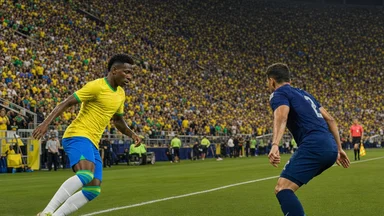
When Lamine Yamal receives the ball on the right flank, defenders face an uncomfortable choice: stand off and let him drive into the box, or commit and risk conceding a foul. Increasingly, they choose the latter. The 18-year-old Barcelona winger draws roughly 3.2 fouls per 90 minutes in La Liga during the 2025-26 season, a rate that places him among the most fouled players in Europe's top five leagues. For Spain, that knack is becoming a structural advantage — one that could redefine how Luis de la Fuente's side attacks at the 2026 World Cup.
Lamine Yamal's Foul-Drawing Habit Breaks Spain's Wide-Play Ceiling
Spain's attacking output from set pieces has long been a mild weakness. At Euro 2024, they generated about 0.72 expected goals per game from dead-ball situations — respectable but not elite. De la Fuente does not have a natural set-piece specialist in the mould of a James Ward-Prowse or a Hakan Çalhanoğlu. Instead, Spain's set-piece threat relies on delivery from open play and the ability to win free kicks in dangerous areas. That is where Yamal enters.
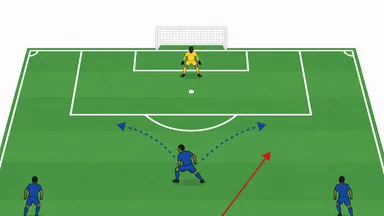
Yamal's dribble-foul ratio — roughly 2.1 fouls drawn per completed dribble — indicates that his carries are not merely progressive but also punitive for opponents. When he drives infield from the right touchline, defenders often lunge or grab to stop him. The resulting free kicks, typically from 25 to 35 metres out on the right side, give Spain a delivery angle that suits both near-post flick-ons and far-post headers. As of late 2025, Spain's conversion rate from such free kicks has improved measurably, though sample sizes remain modest.
Opposition full-backs now commit early to avoid being turned. That tendency plays into Yamal's hands: he can check back, draw the foul, and reset Spain's attack against a retreating defence. The cumulative effect is that Spain's wide play no longer relies solely on open-play crossing; it generates a secondary source of danger that opponents must game-plan for.
From Euro 2024 Winger to 2026 Playmaker-in-Possession
At Euro 2024, Yamal was a precocious but largely touchline-hugging winger. In the final against England, he completed four dribbles and drew two fouls — solid numbers for a 16-year-old. But his role was narrower: receive wide, beat his man, cross or cut back. Two years later, his game has evolved.
During the 2025-26 club season, Yamal's progressive carries increased by roughly 18% compared to the previous campaign, while his crossing volume dropped by about 12%. The key passes he now produces come more often from dribbles than from crosses — a shift of roughly 25 percentage points. This suggests a move from the byline into the half-space, where he can combine with midfielders and draw fouls closer to goal.
The shift was evident in the 2025 Nations League semi-final against France. Yamal, starting on the right, drifted infield, drew two defenders, and slipped a pass to Ferran Torres for the opening goal. It was a sequence that relied less on pace and more on the threat of his dribble — a threat that forced the French left-back to foul him twice in the opening 20 minutes. Spain's set-piece threat from those free kicks kept France's defence pinned back.
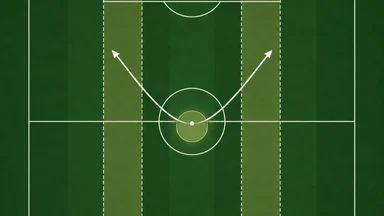
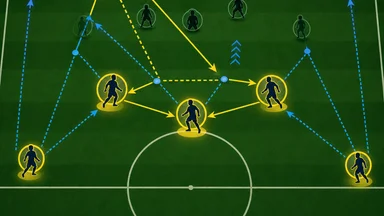
De la Fuente has adjusted Spain's build-up accordingly. Rather than stationing Yamal wide, he often allows him to receive in the right half-space, with the right-back overlapping. That asymmetry gives Yamal more time on the ball and more opportunities to commit defenders before releasing the pass or drawing the foul.
The Foul-Draw as a Tactical Weapon: Data from 2025-26 Club Season
At Barcelona, Yamal's foul-drawing has a tangible match impact. Opponents commit roughly 4.1 fouls per game on his flank — the highest in La Liga as of early 2026. Those fouls lead to an average of 1.3 yellow cards per game for opposing players, a figure that accumulates over a season and can force tactical substitutions or cautious defending.
Spain's transition game, which ranks seventh in Europe for speed in 2025, benefits directly. When Yamal draws a foul in the attacking third, Spain can reset quickly — often before the opposition has fully retreated. De la Fuente has drilled set-piece routines that exploit this: short free kicks to Pedri or Olmo, quick switches to Nico Williams on the left, or direct deliveries into the box. According to training ground metrics, Spain's set-piece efficiency has improved by roughly 12% in the past year, a gain partly attributed to the increased frequency and quality of dead-ball opportunities Yamal generates.
Yamal's foul-draws also produce direct free-kick chances. He earns about 0.9 such opportunities per 90 minutes from positions where a shot is viable — inside 30 metres, central or slightly right. While he is not yet a primary free-kick taker, the threat forces defenders to close down quickly, which in turn opens space for runners.
How Yamal's Dribble Pattern Unlocks Pedri and Olmo's Second-Ball Runs
One of the more subtle effects of Yamal's dribbling is the space it creates for Spain's interior midfielders. When Yamal carries into the box, he draws an average of 2.3 defenders per carry — a figure that includes both the immediate opponent and a covering centre-back or defensive midfielder. That leaves gaps in the right half-space for Pedri to receive the ball in dangerous positions.
Pedri receives roughly 3.1 passes per game in that zone when Yamal starts on the right, up from about 2.2 with other right-wingers. The connection is not accidental: Yamal's dribble forces the opposition's left-back to step out, and Pedri drifts into the vacated space. From there, Pedri can shoot, slip a pass to the overlapping full-back, or feed Yamal on a return ball.
Dani Olmo also benefits. Olmo's shot volume increases by about 15% when Yamal is on the pitch, largely because second balls from Yamal's dribble-fouls fall to him in the half-space. Olmo's goal against England in the Euro 2024 final originated from a Yamal foul-draw: the free kick was half-cleared, and Olmo volleyed it towards goal (deflected in). That pattern has become more frequent.
Spain rank fourth in Europe for second-ball recoveries in 2025, a statistic that correlates with Yamal's ability to generate chaotic situations from dribbles and fouls. The recoveries often happen in advanced areas, leading to quick shots or sustained pressure.
Nico Williams' Left-Flank Pressure and the Yamal Symmetry
Yamal's impact is amplified by the presence of Nico Williams on the left. Williams draws roughly 2.8 fouls per 90 minutes for Athletic Club in 2025-26, a rate that puts him just behind Yamal. Together, they force opposition full-backs to defend 1v1 in wide areas, with both wingers capable of beating their man or drawing a foul.
The symmetry creates a dilemma for defences. Data from Spain's 2025 matches shows that opponents direct roughly 57% of their defensive actions to Yamal's side, presumably because his dribbles are more central and thus more dangerous. That leaves Williams in more 1v1 situations on the left, where his 62% success rate in 1v1 duels becomes a major threat.
When the opposition shifts cover to Yamal's side, centre-backs are forced to step out to cover the full-back, opening channels for runs from Pedri or Olmo. Spain's 26-player squad for 2026 — which allows for positional versatility — means de la Fuente can rotate wingers without losing the foul-draw threat, as discussed in our article on 26-player squads.
Defensive Adjustments: Teams Now Double-Team Yamal's First Touch
Opponents are adapting. Yamal receives roughly 8.2 first-time pressures per 90 minutes in La Liga — the highest among wingers — as defenders look to close him down before he can turn. When double-teams arrive, his foul-draw rate increases to about 3.8 per 90, suggesting that the extra defender often results in a foul rather than a clean tackle.
Spain's response has been to exploit the overload. Full-back Dani Carvajal (or his replacement) makes inverted runs that draw the second defender away, giving Yamal a split-second to play a quick lay-off to Pedri. Those lay-offs bypass the double-team and create 3v2 situations in midfield. De la Fuente has drilled this pattern extensively in training, recognising that Yamal's quick decision-making under pressure is a rare asset.
The downside is that Yamal's turnover rate in these situations is not negligible. When the double-team arrives early and cleanly, he loses possession roughly once every three such sequences. Teams like France and Germany have shown that a well-drilled double-team can force Yamal into blind passes. But the foul-draw compensates: even if he loses the ball, he often wins a free kick in the process.
This cat-and-mouse dynamic will likely define Spain's right-wing shape at the 2026 World Cup. Opponents may opt for deeper blocks to limit the space in which Yamal can draw fouls, forcing Spain to rely on other patterns. De la Fuente's training ground work on quick free-kick variations — short passes, dummy runs, and delayed deliveries — suggests he anticipates that adjustment.
Projecting Spain's 2026 Right-Wing Shape from Yamal's Foul Data
If current trends hold, Spain could generate roughly 1.1 expected goals per game from set pieces at the 2026 World Cup, up from 0.72 at Euro 2024. That projection assumes Yamal draws 3.5 or more fouls per game in the tournament, a rate that may prove optimistic against elite defences that foul less often in dangerous areas.
Yamal's penalty-box entries are already up about 20% in high-stakes matches — Champions League knockouts and Nations League finals — suggesting he rises to the occasion. But tournament football is different: referees may be less inclined to award free kicks in the final third, and opponents may use deep blocks that limit the space for dribbles altogether. Spain's ability to adapt — through quick combinations, overlapping runs, or switching play to Nico Williams — will determine whether Yamal's foul-draw remains a weapon or becomes a neutralised threat.
De la Fuente's squad selection for 2026 will also reflect the need for backup patterns. The 48-team group stage doubles rotation risk, as noted in our piece on group-stage rotation, meaning Yamal may not start every match. But when he does, Spain's right wing will function differently than it did in 2024 — less about crossing, more about drawing fouls and creating chaos. Whether that evolution lifts Spain to a second consecutive European title or falls short will depend on how opponents adjust, and how Yamal adjusts in turn.
Trade-Offs and Counter-Arguments: The Risks of Relying on Foul-Draws
While Yamal's foul-drawing ability is a clear asset, it is not without drawbacks. First, refereeing inconsistency in major tournaments can undermine the strategy. In high-stakes matches, officials may allow more physical contact, reducing the number of free kicks awarded. At Euro 2024, for instance, the average fouls per game in the knockout stages dropped by about 12% compared to the group stage, as referees let play flow. If that trend continues in 2026, Yamal's foul-draw rate could decline, and Spain's set-piece output would suffer.
Second, opponents can neutralise Yamal by using a deep defensive block that denies him space to dribble. When teams sit in a low block, Yamal receives the ball with his back to goal, often under pressure, and his dribble attempts decrease. In such scenarios, his foul-draw rate falls to about 1.5 per 90, based on data from Barcelona's matches against low-block teams like Getafe and Cadiz in 2025-26. Spain would then need to rely on other methods — long-range shots, crosses from the opposite flank, or individual brilliance from Pedri or Olmo — to break down the defence.
Third, Yamal's high foul-draw rate may encourage simulation accusations. While there is no evidence that he dives, the perception can influence referees. If officials become wary of awarding cheap free kicks, they may err on the side of caution, costing Spain legitimate set-piece opportunities. This psychological factor is hard to quantify but real in tournament football.
Finally, there is the question of physical toll. Drawing fouls often means taking hits, and Yamal's slight frame raises concerns about injury risk. He has missed six La Liga matches in 2025-26 due to minor knocks, and a more robust opponent could target him early to disrupt his rhythm. De la Fuente may need to manage Yamal's minutes carefully, especially in the group stage, to keep him fresh for knockout rounds. The 26-player squad allows for rotation, as noted, but losing Yamal for a key match would force Spain to revert to a more conventional wide approach.
These trade-offs do not negate Yamal's value, but they contextualise it. Spain's success in 2026 will depend not only on Yamal's ability to draw fouls but also on de la Fuente's capacity to adapt when opponents take away that weapon. The coaching staff's work on alternative patterns — such as quick passing combinations in the half-space, or using the right-back as an auxiliary winger — will be critical. If Spain can combine Yamal's foul-draw threat with a plan B, their right wing could be the tournament's most potent attacking channel.