Visa Timelines and Flight Hubs Shape 2026 Fan Travel Routes
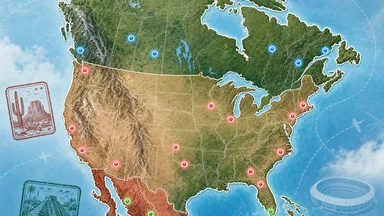
The 2026 FIFA World Cup will be the first to span three host nations—the United States, Canada, and Mexico—across a landmass that stretches roughly 8,000 kilometres from Vancouver to Cancún. For the millions of fans expected to attend matches in up to 16 cities, the tournament presents a logistical puzzle that goes far beyond booking a ticket. Visa requirements, flight hub connectivity, time-zone shifts, and land-border procedures will all influence how supporters design their itineraries. Drawing on lessons from previous World Cups and current travel infrastructure, this article maps the key factors that will shape fan mobility in 2026.
Three Countries, Three Visa Regimes: Where the Bottlenecks Are
Each host nation operates its own entry rules, and the differences matter well before kick-off. The United States requires most foreign visitors to obtain either a B-2 tourist visa (an in-person interview at a consulate) or, for citizens of 41 eligible countries, an ESTA authorisation under the Visa Waiver Program. As of late 2024, ESTA approvals typically take 72 hours, but the US State Department advises applying at least 72 hours before departure. However, interview wait times for B-2 visas in some markets—such as Brazil, India, and Nigeria—have stretched beyond 400 days in recent years. For fans from those nations, applying early—ideally 12 to 18 months before the tournament—will be critical.
Canada operates a similar two-tier system: citizens of visa-exempt countries (including the US and most European nations) need an eTA, which is usually approved within minutes online. Others must apply for a visitor visa, with processing times that can range from a few weeks to several months depending on the applicant's country of residence. Mexico, by contrast, offers visa-free access to many nationalities—including all US and Canadian citizens—and permits tourists to stay up to 180 days. For fans from countries that require a Mexican visa (such as Peru and Cuba), the process is generally faster than a US visa, but still requires an application at a Mexican consulate.
Transit visas add another layer. Fans whose itineraries involve connecting through a US airport en route to Canada or Mexico may need a US transit visa even if they do not clear customs. The US Transit Without Visa (TWOV) programme applies only to a limited set of nationalities and requires same-day onward travel on a specific list of airlines. Similarly, Canada’s Transit Without Visa programme is only available to citizens of certain countries. For fans flying from Europe to Mexico via a US hub, a US visa or ESTA is essentially mandatory, which could push some to choose direct flights to Mexico City or Cancún instead.
Given these timelines, the Fan Travel Alliance—a coalition of supporter groups from 12 countries—has called for FIFA to coordinate with host governments on a dedicated tournament visa or accelerated processing. No such system had been announced as of early 2025, but the precedent exists: Russia’s 2018 World Cup offered visa-free entry for fans holding a Fan ID, a move widely credited with boosting attendance. Whether the three North American hosts will adopt a similar approach remains an open question.
Flight Hubs and Fuel Stops: Mapping the 2026 Air Network
The sheer size of the 2026 footprint means that air travel will be the primary mode of inter-city transport for most fans. Dallas/Fort Worth (DFW) is likely to serve as the central US hub, given its geographic position, its status as a major American Airlines hub, and its proximity to several host cities (Arlington, Houston, and Kansas City are within a few hours' drive). DFW handled roughly 73 million passengers in 2023 and has ample capacity for additional charter and seasonal flights.
Mexico City’s Benito Juárez International Airport (MEX) and Toronto Pearson (YYZ) will function as regional connectors for the southern and northern legs of the tournament. Direct flights from Europe to each host country are plentiful: London, Paris, and Frankfurt all serve multiple North American gateways. Airlines are expected to add seasonal routes for the tournament, as they did for Qatar 2022, when carriers such as Qatar Airways and Emirates added dozens of extra frequencies. However, unlike Qatar—a country the size of a city—North America’s distances mean that many fans will need to connect through a hub even after crossing the Atlantic.
Layover durations and time-zone shifts will factor into route choice. A fan flying from Berlin to Vancouver might connect in Frankfurt and again in Calgary, adding 6–10 hours of total travel time. By contrast, a direct flight from London to Mexico City takes roughly 11 hours, but the time-zone shift from Central European Time to Central Standard Time is only 7 hours—manageable for most. The worst-case scenario involves a fan travelling from East Asia to Vancouver via Tokyo and Los Angeles, with a total journey time exceeding 20 hours and a 16-hour time difference. For such supporters, advance arrival of two to three days before their first match is advisable.
Domestic flight costs within and between host countries will also vary. US domestic airfares have risen steadily since 2020, with average round-trip tickets between major cities hovering around US$300–500 in 2024. Canadian domestic routes tend to be more expensive due to limited competition and higher airport fees. Mexican domestic flights, on the other hand, are often cheaper, with budget carriers like Volaris and Viva Aerobus offering fares between Mexico City and Monterrey for as low as US$80–120 one-way. Fans planning multi-city itineraries should monitor price trends and book early, ideally when group-stage match schedules are confirmed.
Time-Zone Shock: How Match Kickoffs Dictate Travel Plans
The 2026 tournament will span four time zones: Pacific (Vancouver, Los Angeles, San Francisco), Mountain (Denver), Central (Dallas, Houston, Kansas City, Chicago, Mexico City, Monterrey, Guadalajara), and Eastern (Toronto, Atlanta, Miami, New York/New Jersey, Boston, Philadelphia). Kickoff times will likely be staggered to maximise global television audiences, which means early group matches in Mexico City could start at 10:00 local time (16:00 UTC) while late knockout games in Vancouver might kick off at 20:00 local time (03:00 UTC the next day).
For fans travelling from Europe, the time-zone shift to the Eastern seaboard is only 5–6 hours, making it relatively easy to adjust. However, those heading to the West Coast face a 9-hour difference from Central European Time, and fans from East Asia (e.g., Japan or South Korea) face a 16-hour difference to Pacific Time. Jet lag can impair match-day experience and even physical health if not managed properly. Sleep researchers recommend shifting sleep schedules by one hour per day in the week before travel, and staying hydrated during the flight.
Advance arrival recommendations vary by city. For Vancouver and Seattle (if included), arriving three days before a match allows gradual adjustment to Pacific Time. For Denver, the altitude (roughly 1,600 metres above sea level) adds a physiological factor; some athletes and fans report shortness of breath for the first 48 hours. Mexico City sits at 2,240 metres, which can affect stamina and hydration. Fans flying directly from sea level to Mexico City should allow at least two days of light activity before attending a match.
The scheduling of matches across time zones also affects travel between venues. A fan attending a group-stage match in Miami (Eastern Time) and then a round-of-16 match in Los Angeles (Pacific) must account for a 3-hour time difference and a flight of roughly 5–6 hours. If the Miami match ends at 22:00 local time, the earliest flight to LA departs around 06:00 the next morning, meaning the fan effectively loses a night's sleep. Smart itinerary planning—such as scheduling a rest day between matches—can mitigate this, but it requires flexibility and awareness of the published schedule.
The Canada–US Border Effect: Crossing by Land or Air
For fans planning to attend matches in both Canada and the United States, the land border is a key consideration. The US–Canada border is the longest international border in the world, with over 120 land ports of entry. The busiest crossings for tournament traffic are likely to be at Detroit–Windsor, Buffalo–Fort Erie, and Blaine–Surrey (near Vancouver). Wait times at these crossings can exceed two hours during peak summer weekends, and the tournament will take place in June and July, which is already high season for tourism.
Documentation is straightforward for citizens of both countries: US citizens need a passport or enhanced driver's licence; Canadian citizens need a passport or NEXUS card. For third-country nationals, a valid US visa or ESTA and a Canadian eTA or visa are required. The NEXUS programme, which provides expedited processing for pre-screened travellers, can reduce wait times to under 15 minutes at major crossings. However, NEXUS applications currently take 12–18 months to process, so fans from Canada and the US who do not already have it should apply well in advance.
For fans flying between Canadian and US cities, the process is similar to any international flight: passport control is handled at the departure airport (US pre-clearance exists at major Canadian airports such as Toronto, Vancouver, and Montreal). This means that a fan flying from Toronto to New York clears US customs in Toronto and arrives as a domestic passenger. The reverse journey (US to Canada) requires standard Canadian customs on arrival. Flight times between major pairs are short—Toronto to New York is about 90 minutes—but total travel time including security and customs can stretch to 4–5 hours.
Some ticketing packages may bundle matches across both nations. For example, a fan might attend group-stage matches in Toronto and then a knockout match in New York. The logistics of crossing the border twice (once by air, once by land) require careful timing. A practical approach is to schedule a rest day between matches to account for transit and potential delays. Mobile apps that provide real-time border wait times, such as the US Customs and Border Protection's "Border Wait Times" tool, can help fans decide which crossing to use.
From Mexico’s South to the Pacific Northwest: A Three-Nation Itinerary
Designing a multi-city itinerary that spans all three host countries requires balancing match schedules, travel times, and costs. A hypothetical fan from Europe might start in Mexico City for the group stage, then fly to Monterrey for a round-of-16 match, then to Guadalajara for a quarterfinal, and finally to Vancouver for a semifinal. Such an itinerary covers roughly 6,000 kilometres and involves four flights. The total travel time between venues—including airport transfers and security—could exceed 20 hours across the tournament.
Domestic flight costs within Mexico are relatively low, as noted earlier. Bus travel is also viable for shorter distances: first-class buses in Mexico are comfortable and affordable, with routes like Mexico City–Puebla (about 2 hours) costing roughly US$20–30. In Canada, bus services between cities are limited; the main option is Greyhound (which has reduced service) or regional operators. Rail is an option in Canada via VIA Rail, but routes are slow and infrequent; Toronto–Montreal takes about 5 hours but costs around US$100–150. In the US, Amtrak serves some host cities (e.g., New York–Philadelphia, Chicago–St. Louis) but is generally slower and less reliable than flying.
Accommodation proximity to stadiums versus transport links is a classic trade-off. Hotels near stadiums in cities like New York or San Francisco can cost upwards of US$400–600 per night during the tournament. Fans on a tighter budget might stay in suburbs or neighbouring towns with good public transport connections. For example, staying in Newark, New Jersey, and taking a 20-minute train to MetLife Stadium in East Rutherford is often cheaper than staying in Manhattan. Similarly, in Guadalajara, fans can stay in Zapopan and use the light rail to reach Estadio Akron.
An example route from Mexico City to Monterrey to Guadalajara illustrates the distances: Mexico City to Monterrey is a 1.5-hour flight (or a 12-hour bus ride). Monterrey to Guadalajara is about 1.5 hours by air or 10 hours by bus. Fans who prefer to minimise air travel could take overnight buses, which save on accommodation costs but add fatigue. The decision depends on individual tolerance for long journeys and the spacing of match days.
Data from 2022 and 2018: Lessons for 2026 Fan Mobility
Previous World Cups offer useful benchmarks for fan travel patterns. The 2022 tournament in Qatar was a compact, single-city event where fans could attend multiple matches in a day using the Doha Metro. That model is not scalable to North America, but the lessons about fan behaviour—such as the tendency of fans in Qatar to arrive 1.2 days before matches on average and cluster in fan zones—are transferable. In 2018, Russia implemented a visa-on-arrival system for Fan ID holders, which processed over 1.5 million applications with a reported 99% approval rate. That system reduced bureaucratic friction significantly.
Fan ID systems also facilitated movement within Russia: holders could travel on free trains between host cities, a perk that boosted attendance at multiple venues. For 2026, a similar Fan ID could streamline border crossings and provide discounted transport. However, the North American context lacks the unified rail network that Russia had; the US and Canada have sparse intercity rail, and Mexico’s passenger rail is limited. A more practical benefit might be priority lanes at airports and land borders, similar to the NEXUS model but open to all Fan ID holders.
Weather and altitude factors from previous tournaments also inform planning. The 2010 World Cup in South Africa featured matches at high altitude (Johannesburg at 1,750 metres), and many teams arrived early to acclimatise. For fans, the same principle applies: Mexico City’s altitude can cause dehydration and fatigue, so staying hydrated and avoiding alcohol in the first 24 hours is sensible. Similarly, the 1994 World Cup in the US saw matches in humid cities like Orlando and Dallas, where heat exhaustion was a concern. Fans attending matches in Miami or Houston should plan for temperatures above 32°C (90°F) and high humidity.
Scalability is the overarching challenge. Qatar’s metro moved 1.8 million passengers during the tournament, but it was a purpose-built system for a small geographic area. North America’s existing transport infrastructure is vast but uneven: cities like New York, Toronto, and Mexico City have robust public transit, while others like Arlington, Texas, depend almost entirely on cars. FIFA and local organisers will need to coordinate shuttle services, park-and-ride schemes, and temporary transit expansions to handle the influx. Early data from the 2026 bidding process suggests that host cities have committed to improving public transport links, but implementation remains to be seen.
Stay Put or Roam? The Case for Single-Country Itineraries
Not every fan will want to traverse all three nations. A significant portion may prefer to stay within one country, either to reduce travel costs and jet lag or to immerse themselves in a single culture. For example, a fan based entirely in Mexico could attend matches in Mexico City, Guadalajara, and Monterrey—all within a 1,000-kilometre radius—using affordable domestic flights or buses. The advantages include lower total travel time, no need for multiple visas (only a Mexican visa or visa-free entry), and the ability to book accommodation in one region for longer periods, often at discounted rates. On the downside, such a fan would miss the chance to see matches in iconic US venues like the Rose Bowl or Canada’s BC Place, and might face higher competition for tickets if the same teams play in multiple Mexican cities.
Conversely, a fan committed to a three-nation itinerary gains variety and the opportunity to experience three distinct host cultures, but at the cost of higher expenses, more complex logistics, and greater risk of delays. For instance, a missed connection between Toronto and New York could derail an entire match schedule. The choice ultimately depends on personal priorities: budget, time available, tolerance for uncertainty, and desire for novelty. Some fans may opt for a hybrid approach—spending the group stage in one country and the knockout rounds in another—balancing cost and experience.
Practical Tools and Early Booking Windows for Cost-Conscious Fans
Given the complexity, fans should start planning as early as possible. The match schedule is expected to be released in late 2025, roughly 18 months before the tournament. Once the schedule is known, fans can use price-tracking tools like Google Flights, Hopper, or Skyscanner to monitor airfare trends. Setting alerts for specific routes—such as London to Mexico City or Frankfurt to Toronto—can help catch price drops. Hotel booking sites like Booking.com and Airbnb allow free cancellations on many properties, giving fans the flexibility to adjust plans.
Group ticket registration timings are another key variable. FIFA typically opens a random draw for ticket applications, followed by a first-come, first-served phase. Fans who secure tickets early can then plan travel around confirmed match dates. For those who miss out, the resale platform (usually run by FIFA) offers a second chance, though prices may be higher. It is wise to book refundable flights and accommodation until tickets are confirmed, to avoid financial loss.
Visa application start dates vary by nationality. For US B-2 visas, applicants can book interviews up to a year in advance; given current wait times, fans from high-demand countries should schedule interviews as soon as they know their travel dates. Canadian visitor visa applications can be submitted online up to six months before travel. Mexican visas are typically processed within a few weeks, but appointments at some consulates may be limited. Fans should check the official consulate websites for the most up-to-date information.
Travel insurance covering multi-country trips is highly recommended. Policies that include trip cancellation, medical evacuation, and baggage loss are standard. Some insurers offer World Cup-specific packages that cover match ticket loss or schedule changes. Fans crossing the US–Canada border should verify that their health insurance provides coverage abroad; US healthcare is expensive, and Canadian provincial plans generally do not cover out-of-country care. A comprehensive policy might cost 5–10% of the total trip value but can save thousands in an emergency.
Mobile apps for real-time border wait times include the US CBP's official app, Canada's Border Wait Times tool, and third-party apps like Waze (which shows border crossing delays). For airport security, apps like MyTSA provide estimated wait times at US airports. Fans should download these apps before departure and check them regularly, especially when crossing land borders during peak hours (typically Friday afternoons and Monday mornings).
Finally, fans should consider joining online communities—such as Reddit's r/worldcup or dedicated fan forums—where experienced travellers share tips and updates. The collective knowledge of thousands of supporters can be invaluable for navigating unexpected changes, such as a last-minute schedule shift or a new visa policy. No plan survives first contact with a tournament of this scale, but preparation can turn a stressful journey into a memorable one. As 2026 approaches, the central question remains: will the three host nations collaborate enough to smooth the path for fans, or will bureaucratic friction dampen the spirit of the world's biggest sporting event? Only time—and a coordinated effort—will tell.