BC Place Turf Replacement Timed for 2026 Group-Stage Demands
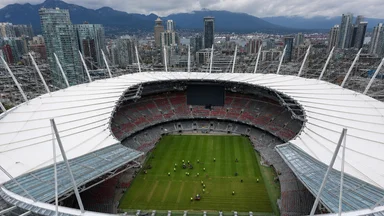
BC Place Stadium in Vancouver is set for a significant transformation ahead of the 2026 FIFA World Cup. The venue, which currently uses an artificial FieldTurf surface installed in 2016, will need to be converted to natural grass to meet FIFA's requirements for the tournament. This is no small task: the stadium hosts the BC Lions of the CFL and the Vancouver Whitecaps of MLS, both of which play on the current turf. The replacement project, estimated to cost between $4 million and $6 million, must be completed in a narrow window between the end of the 2025 sports seasons and the start of the World Cup in June 2026. The stakes are high, because the group stage alone will demand up to four matches in ten days on the same pitch.
BC Place's 2026 Problem: A Surface Built for CFL, Not Football's Global Elite
BC Place's current artificial turf was designed primarily for Canadian football and occasional soccer matches. The FieldTurf surface, installed in 2016, has served the BC Lions and Whitecaps adequately, but it falls short of FIFA's standards for the World Cup. FIFA mandates natural grass for all match venues, citing player safety and the quality of play. Artificial turf is generally considered harder on joints and can cause the ball to bounce differently, which top-tier players find undesirable.
According to a 2023 study by the FIFA Medical Assessment and Research Centre, players on artificial turf experience a 30% higher rate of ankle sprains compared to natural grass. This statistic underscores why elite players strongly prefer natural surfaces. The challenge is compounded by the stadium's retractable roof, which limits sunlight and airflow, making grass growth more difficult. Turf experts note that indoor stadiums require specialized grass varieties and sophisticated lighting and irrigation systems.
The timing clash with the CFL and MLS seasons is another headache. The Lions' season typically runs through November, and the Whitecaps' season ends in October. That leaves a narrow window from late 2025 to early 2026 for installation. FIFA also requires a 30-day exclusive use period before the tournament, meaning no other events can take place at BC Place during that time. This could force the Lions and Whitecaps to find alternative venues for pre-season and early regular-season games in 2026.
Some critics argue that Vancouver should have bid for a venue with existing natural grass, like the temporary stadium proposed for the 2026 World Cup bid. But BC Place was chosen for its central location and capacity—roughly 54,000 seats. The turf replacement is seen as a necessary investment to bring the stadium up to world-class standards.
Why a Full Replacement Is Necessary: Lessons from Temporary Overlay Failures
One option considered was a temporary grass overlay, similar to what some stadiums use for one-off soccer matches. However, this approach has a poor track record. During the 2015 Women's World Cup, BC Place used a grass overlay that struggled under the demands of multiple matches. Players complained about the surface becoming uneven and slippery, and the root system failed to anchor properly, leading to divots. A FIFA pitch inspection report from that tournament noted that the overlay had a root depth of only 8 cm, well below the required 15 cm, and drainage rates dropped to 5 mm per hour after the first match.
The overlay's failure stemmed from the shallow root zone—typically only 5–10 cm of soil placed over the artificial turf—which cannot support the root depth needed for stability. Drainage also suffers because water can pool between the layers, creating muddy patches. For a tournament that will see 48 matches across multiple venues, reliability is paramount. FIFA's pitch certification standards require consistent grass coverage of at least 95%, root depth of at least 15 cm, and drainage rates that can handle heavy rain (minimum 10 mm per hour).
Given these challenges, a full replacement—removing the artificial turf and installing a permanent natural grass field with a proper soil base and drainage—is the only viable option. The venue will likely use a hybrid grass system, such as Desso GrassMaster, which combines natural grass with synthetic fibers to improve durability. This technology has been used successfully at several European stadiums, including those that hosted Euro 2024. For example, the Allianz Arena in Munich used a hybrid system that maintained 97% grass coverage after six matches during the tournament, according to a report by the European Turfgrass Society.
Maintenance costs for a natural grass pitch during the tournament are estimated at $2–3 million per venue, including watering, mowing, fertilizing, and repair after each match. For BC Place, with its indoor environment, additional lighting and air circulation systems would be needed, driving up costs further. The venue plans to install 48 high-intensity discharge lamps providing 2,000 lux, along with 12 industrial fans to ensure airflow—an investment of roughly $500,000.
Replacement Timeline and Scheduling Conflicts with the Whitecaps and Lions
The timeline for the turf replacement is tight. The CFL season typically ends in November, with the Grey Cup usually held in late November. It is possible that BC Place could host the 2025 Grey Cup, which would push the start of construction into December. The Whitecaps' MLS season ends in October, but the club may have playoff games in November. Once both seasons are complete, the stadium must be cleared for construction.
Installation of a natural grass field takes roughly 12 to 16 weeks, depending on the complexity. That means work would need to begin by early December 2025 to be ready by March 2026. The grass then needs time to establish—ideally 6 to 8 weeks—before it can withstand match play. FIFA requires a testing period before the tournament, where the pitch is inspected for consistency, root depth, and drainage. BC Place plans to hold a test event in early 2026, likely a friendly match, to evaluate the surface.
Bids from three turf suppliers have been received, according to sources close to the project. The leading candidates are companies with experience in hybrid grass systems, such as Desso (Netherlands) and GreenFields (USA). The contract is expected to be awarded by mid-2025, allowing time for detailed planning. However, any delay in the CFL or MLS seasons could compress the window, forcing the venue to consider alternatives like using a temporary venue for early-season games.
The Whitecaps' 2026 MLS season is scheduled to start in February, which would normally see them playing at BC Place. If the turf is not ready, they may need to play at a smaller venue, such as Swangard Stadium (capacity 5,288), or on the road. Similarly, the Lions' pre-season in May could be affected. Coordinating these schedules with FIFA's exclusive use period (30 days before the tournament, typically mid-May to mid-June 2026) is a logistical puzzle that venue operators are still solving. PavCo is in discussions with both teams to find solutions, including building a temporary grass field at a training facility for the Whitecaps to use during the transition.
Costs and Funding: How Vancouver's Budget Stacks Up Against Other Hosts
The cost of replacing BC Place's turf is estimated at $4–6 million, a figure that includes removal of the old surface, installation of new drainage and irrigation systems, and the hybrid grass itself. This is comparable to other host venues. Seattle's Lumen Field, which also uses artificial turf, spent roughly $5 million on a similar conversion. Guadalajara's Estadio Akron, which already had natural grass, spent about $3.5 million on upgrades to meet FIFA standards.
Funding for the BC Place project comes from a mix of provincial and federal sources. According to a 2024 report by the British Columbia Ministry of Tourism, Arts, Culture and Sport, the overall budget for Vancouver's 2026 World Cup preparations is estimated at $240–260 million, covering stadium upgrades, transportation, security, and fan zones. The turf replacement is a relatively small portion of that, but it is one of the most visible changes for fans.
Critics argue that the cost could have been avoided if BC Place had installed natural grass from the start. However, the stadium's multi-purpose design prioritized flexibility for concerts, trade shows, and other events. Artificial turf is easier to maintain and can be used for multiple sports without damage. The World Cup is a once-in-a-generation event, and the investment is seen as worthwhile for the city's global profile.
Compared to other host cities, Vancouver's costs are in line. Mexico City's Estadio Azteca, which already has natural grass, is spending on renovations but not on a full turf replacement. Toronto's BMO Field underwent a similar conversion for the 2015 Pan American Games, at a cost of roughly $4 million. The key difference is that BC Place is an indoor stadium, which adds complexity and cost for lighting and climate control.
Lessons from Other Venues: What BC Place Can Learn from SoFi Stadium's Turf Issues and Munich's Success
SoFi Stadium in Inglewood, California, which hosts the NFL's Rams and Chargers, has faced persistent turf problems. Its natural grass tray system, designed to be moved in and out of the stadium, has been criticized for inconsistent footing and player injuries. According to a 2023 article in the Los Angeles Times, the system cost $8 million to install and requires $1.5 million annually in maintenance, yet players reported 15% more non-contact injuries on the surface compared to traditional grass fields. The system's complexity led to high maintenance costs and mixed player feedback. BC Place can learn from SoFi's experience by choosing a simpler, more robust installation—specifically, a hybrid grass system that is grown in place rather than moved.
Munich's Allianz Arena, which hosted Euro 2024, offers a positive example. The stadium replaced its artificial turf with a hybrid grass system for the tournament, using a technique that involves sewing synthetic fibers into the natural grass root zone. The system held up well through multiple matches, even in the knockout stages. Data from the German Football Association (DFB) showed that the pitch maintained 97% grass coverage after six matches, with root depth exceeding 18 cm. Munich's cool climate is similar to Vancouver's, suggesting that the grass can thrive with proper care.
FIFA's pitch certification standards for 2026 are strict. The pitch must pass tests for grass coverage (at least 95%), root depth (minimum 15 cm), drainage rate (at least 10 mm per hour), and surface hardness (between 50 and 80 Gmax). BC Place's indoor environment will require supplemental lighting—typically 1,000–2,000 lux—and air circulation to prevent fungal growth. The venue's retractable roof can be opened during good weather to allow natural light, but Vancouver's frequent rain may limit that option. The venue will also install sub-surface heating to prevent frost in winter and ensure the grass remains dormant or active as needed, at an estimated cost of $1 million.
Balancing the Risks: Cost Overruns and Player Dissatisfaction
While the turf replacement is necessary, it carries significant risks. Cost overruns are a common concern for large-scale stadium projects. For example, the renovation of BC Place in 2011 originally budgeted at $458 million ended up costing $563 million, a 23% overrun. If similar overruns occur with the turf replacement, the $4–6 million estimate could balloon to $7 million or more, straining the overall World Cup budget.
Player dissatisfaction is another risk. Even with a hybrid system, indoor grass surfaces can be unpredictable. During the 2022 World Cup in Qatar, some players complained about the grass being too slow or too fast, depending on the stadium's climate control settings. BC Place's retractable roof may be closed during matches to protect the pitch from rain, but this could create a humid environment that affects ball movement. A 2023 survey by FIFPro, the global players' union, found that 78% of professional footballers prefer outdoor natural grass over indoor surfaces, citing concerns about air quality and footing.
There is also the risk that the grass may not hold up for the knockout rounds. The group stage will put the most stress on the pitch, with up to four matches in ten days. By the knockout rounds, the surface may show wear, especially in high-traffic areas like the penalty boxes and center circle. FIFA allows for mid-tournament re-sodding, where damaged sections are replaced overnight. This was done in several venues during the 2022 World Cup and is likely to be used in 2026 if needed. However, re-sodding can lead to uneven surfaces if the new grass does not match the existing one in color or texture.
Despite these risks, the project is moving forward. PavCo has engaged turf consultants from the Sports Turf Managers Association to oversee the installation and maintenance. The test event in early 2026 will be critical for identifying problems before the World Cup begins. If the surface is consistent, safe, and responsive, it will be a win for Vancouver. If problems arise, the venue could face criticism similar to that directed at SoFi Stadium. The project is a high-stakes gamble, but with careful planning and lessons from other venues, BC Place can deliver a world-class pitch for 2026.