Nike’s 2026 Kit Deal Ties Payments to Shirt Sales Data by Market
Nike is set to introduce a performance-based kit sponsorship model for the 2026 World Cup cycle, linking payments directly to shirt sales data tracked at the market level. The move represents a significant departure from the fixed-fee structures that have dominated the industry for decades. Under the new terms, Nike will aggregate point-of-sale data from retail partners across each federation's primary market and adjust payments quarterly based on volume thresholds. The deal, which covers roughly a dozen national teams, was finalized in early 2026 after an 18-month negotiation period. Federations that previously received a guaranteed annual sum—reportedly US$ 20 million for smaller teams and up to US$ 40 million for top-tier teams—will now see payments fluctuate with consumer demand.
The shift comes as Nike's internal post-mortem on the 2018 and 2022 World Cup cycles revealed significant discrepancies between sponsorship outlays and actual kit revenue. For example, a top European federation with a US$ 35 million annual fee generated only US$ 18 million in retail sales over the same period, while Nigeria's 2018 kit demand far exceeded supply, yet the federation received no additional compensation. Retail digitization has made market-by-market tracking feasible, and Nike's new platform, built with a third-party analytics firm, provides weekly updates on unit sales by region. Federations get dashboard access to monitor their own performance, and payments are triggered automatically when certain volume thresholds are crossed.
Early test cases have informed the rollout. Brazil's 2024 home kit, released in March of that year, was the first to operate under a pilot version of the model. Data from that launch showed strong sales in North America and Asia, but softer demand in Europe. England's 2025 away kit, introduced ahead of the European Championship qualifiers, provided a second data point. Nigeria's 2025 Africa Cup of Nations kit, which sold out initial runs in several West African markets, outperformed Nike's projections by a wide margin. All three federations agreed to new long-term terms based on the pilot results. Nike has since extended the model to cover its entire 2026 portfolio, including France, Netherlands, Portugal, and several other teams.
Federation reactions have been mixed, reflecting a classic risk-reward trade-off. Smaller federations, such as those from Africa and Asia, see an opportunity to earn more if their kit resonates locally. One federation official, speaking on condition of anonymity, noted that the old fixed fee was often a fraction of what top teams received, so the variable model offers a path to higher revenue. Top-tier federations, however, lose the certainty of guaranteed income. Brazil's football confederation, for instance, accepted a lower baseline guarantee in exchange for a higher revenue share above a certain sales threshold. Negotiations stretched for 18 months, with some federations pushing for minimum floors and caps on downside risk. FIFA has not directly intervened but is monitoring the model as part of its broader interest in commercial equity among member associations.
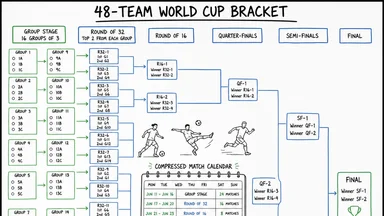
The 2026 World Cup, hosted across three countries, represents a logistical and commercial challenge unlike any previous tournament. Nike's decision to tie payments to sales data stems from lessons learned in earlier cycles. During the 2018 World Cup, several federations with fixed-fee deals saw kit sales spike in unexpected markets—such as Colombia's surge in Japan—but Nike had no mechanism to adjust payments upward. Conversely, in 2022, some top teams underperformed in retail while still drawing full sponsorship fees. An internal post-mortem, completed in 2023, estimated that the mismatch between fixed fees and actual sales cost Nike tens of millions in overpayment across the 2018–2022 period. Retail digitization has been a key enabler. Point-of-sale data from major sporting goods retailers, department stores, and online platforms can now be aggregated weekly. Nike's analytics team, working with a third-party platform, processes this data to calculate sales by federation market. The system distinguishes between sales in a federation's home market—say, England kits sold in the UK—and sales in other regions, which are attributed to the federation's global appeal. This granularity allows Nike to reward federations that generate demand beyond their borders. Competitors Adidas and Puma are closely watching the rollout. Adidas, which sponsors Germany and Argentina among others, has historically used fixed-fee deals with occasional performance bonuses. Puma, with a smaller portfolio, has experimented with revenue-sharing on limited-edition kits but has not yet adopted a full market-by-market model. The 2026 tournament's expanded format—48 teams across 16 host cities—also plays a role. More matches mean more exposure for smaller federations, which could see kit sales rise if they reach later stages. Nike's variable model captures that upside without requiring renegotiation mid-cycle. For federations that fail to qualify or exit early, payments will be lower, but the baseline guarantee provides a safety net. The overall effect, Nike executives have said, is to align incentives: federations that invest in marketing and fan engagement in their home markets will see direct financial returns.
The technical infrastructure behind Nike's new model is worth examining. Point-of-sale data flows from retail partners—including chains like JD Sports, Decathlon, and Foot Locker, as well as Nike's own direct-to-consumer channels—into a centralized data lake. A third-party analytics firm, Quantexa, contracted by Nike, scrubs the data for duplicates and errors, then aggregates it by federation market. The attribution logic is not trivial: a Brazil shirt sold in Germany could be counted toward Brazil's market if the buyer is identified as a Brazilian expatriate via loyalty card data, or toward Germany's if no such link exists. Nike uses a probabilistic model based on shipping addresses and purchase history to make this determination. Federations receive a dashboard updated weekly, showing cumulative sales, trends by region, and projected payment tiers. Payments are triggered when a federation crosses a pre-agreed volume threshold—for example, 100,000 units sold in a quarter. The thresholds vary by federation size and market potential. Smaller federations might have a lower bar, while top teams face higher targets. Nike audits the data quarterly through an independent accounting firm. Disputes are resolved through a predefined arbitration process. As of early 2026, no major disputes had arisen, though some federations have questioned the attribution of online sales from third-party marketplaces like Amazon, where buyer location data can be incomplete. The system also feeds into Nike's supply chain planning. Retailers order smaller, more frequent batches based on real-time demand signals, reducing the risk of overstock and markdowns. For the 2026 World Cup, Nike plans to release kits in regional color variants—such as a blue-dominated away kit for Brazil in Asian markets—based on test data from the 2024–25 cycle. This is a notable shift from the one-kit-fits-all approach that has historically led to unsold inventory in certain regions. The data pipeline, in effect, blurs the line between sponsorship and retail, making kit deals more like a revenue-sharing joint venture than a traditional endorsement contract.
Brazil's 2024 home kit served as the first test of the variable model, though it was not publicly announced as such at the time. The kit, released in March 2024, featured a return to the classic yellow-and-green design with subtle updates to the collar and sleeve cuffs. Sales data from the first quarter showed strong performance in North America—driven by the large Brazilian diaspora and the 2024 Copa America, hosted in the United States—and in Asia, particularly Japan and China. European sales were softer, partly due to the kit's premium pricing in markets where Nike's brand is less dominant. Brazil's football confederation received a payment roughly 15% higher than the old fixed quarterly fee, according to a source familiar with the terms. England's 2025 away kit, launched in August 2025 ahead of European Championship qualifiers, provided a contrasting data point. The kit, a red-and-white design with a retro pattern, sold well in the UK but underperformed in continental Europe. Nike attributed this to stronger competition from Adidas, which sponsors several European national teams. England's payment for the quarter ended December 2025 came in slightly below the old fixed fee, but the federation accepted the result as part of the new model. The Football Association has since negotiated a higher baseline guarantee for the 2026 cycle, reflecting its larger market size. Nigeria's 2025 Africa Cup of Nations kit, released in November 2025, was the most dramatic test case. The kit, a green-and-white design with bold geometric patterns, sold out initial runs in Nigeria, Ghana, and South Africa within weeks. Nike had underestimated demand and had to rush additional production. Sales data showed that Nigeria's kit outperformed projections by roughly 40% in the first two months. Under the variable model, the Nigerian Football Federation received a payment that was nearly double what it would have earned under the old fixed fee. The success has encouraged other African federations to negotiate similar terms, though Nike has been cautious about extending the model to markets with less reliable retail data.
Federation reactions to Nike's new model have been shaped by size and market strength. Smaller federations, particularly those from Africa and Asia, have been the most enthusiastic. They see the variable model as a chance to earn more if their kit gains popularity, without being locked into a low fixed fee. For example, a federation like Senegal, which has a passionate fan base but limited commercial infrastructure, could benefit from spikes in sales during successful tournament runs. However, these federations also face challenges: they may lack the marketing budgets to drive demand, and their retail data can be incomplete in markets with informal economies. Nike has offered technical assistance to help federations improve data collection at the point of sale. Top-tier federations, such as Germany, France, and the Netherlands, have been more cautious. Their fixed fees were substantial, and the variable model introduces uncertainty. Germany's football federation, for instance, initially resisted the shift, arguing that its brand value should command a premium regardless of short-term sales fluctuations. After months of negotiation, Germany accepted a deal with a higher baseline guarantee than smaller federations but still lower than its previous fixed fee, in exchange for a generous revenue share above a relatively low threshold. The French federation took a similar approach. Player unions have also raised questions about revenue sharing, arguing that players' image rights contribute to kit sales and that they should receive a portion of the variable payments. Nike has not directly addressed these concerns, but some federations have agreed to allocate a share of the variable revenue to their player bonus pools. FIFA has remained on the sidelines, though it is monitoring the model as part of its broader interest in commercial equity. The governing body's own sponsorship deals with Adidas and other brands use fixed fees, but FIFA has indicated it may consider performance-based components in future cycles. For now, the organization is focused on ensuring that the variable model does not create disparities that affect competitive balance. Some observers have noted that federations with stronger retail infrastructure—such as England, with its well-developed sports retail market—may have an inherent advantage. Nike counters that the model rewards any federation that generates demand, regardless of market size, and that the data pipeline can capture sales from any region.
The variable payment model is already influencing Nike's approach to kit design and release timing. Design cycles, which once followed a fixed two-year schedule, are now informed by sales data from previous releases. For the 2026 World Cup, Nike tested regional color variants in selected markets before the final design was locked. Brazil's away kit, for example, was offered in a blue-heavy version in Asian markets during a limited pre-launch in late 2025. Sales data from that test helped Nike decide to produce a larger run of the blue variant for the global launch. Similarly, England's home kit for 2026 incorporates a lighter shade of white based on feedback from focus groups and early sales of the 2025 away kit. Limited-edition kits tied to specific matches are also becoming more common. Nike released a special edition Nigeria kit for the 2026 Africa Cup of Nations final, even though Nigeria did not reach that stage. The kit, produced in a small run, sold out within hours and generated significant buzz. Under the variable model, such limited editions can boost quarterly sales and trigger higher payments for the federation. Retailers, for their part, are ordering smaller, more frequent batches to avoid overstock. This is a shift from the traditional model, where retailers placed large orders months in advance and often ended up discounting unsold inventory after the tournament. Nike's supply chain has adapted to shorter lead times, with production facilities in Southeast Asia and Eastern Europe able to respond to demand signals within weeks.
The long-term implications for the sponsorship industry are significant. If Nike's model proves successful, other brands may follow. Adidas has already begun piloting a similar approach with a few smaller federations, though it has not yet announced a full rollout. Puma, which sponsors Italy and several African teams, is experimenting with revenue-sharing on limited-edition kits but has been hesitant to adopt a full variable model due to data reliability concerns. The shift could also affect how federations value their sponsorship rights. In the past, a fixed fee provided stability but capped upside. The variable model introduces volatility but also the potential for higher earnings, especially for federations that invest in marketing and fan engagement. For fans, the changes may be invisible—the kits will still be sold in stores and online—but the data-driven approach behind them could lead to more responsive design and availability. One unresolved question is how the model will perform during a World Cup year, when sales typically spike. Nike's projections assume that the 2026 tournament will generate a surge in kit sales across all federations, but the magnitude of that surge is uncertain. If a federation like Portugal, for instance, reaches the semifinals, its kit sales could triple, triggering a large payment. If it exits in the group stage, sales may be flat. The variable model captures that risk, but it also means that federations' revenue will be partly tied to on-field performance—a factor they cannot fully control. Nike has acknowledged this and included a tournament performance bonus in some contracts, separate from the sales-based payments. That hybrid structure may become the industry norm, combining the predictability of fixed fees with the upside of variable payments. Ultimately, the key tension remains: federations must weigh the security of a guaranteed sum against the possibility of earning more through consumer demand, a trade-off that will define sponsorship negotiations for years to come.