Kylian Mbappé’s Reduced Defensive Duels Shift France’s 2026 Shape
Kylian Mbappé remains one of the most dangerous attackers in world football, but his defensive contributions have declined noticeably since his move to Real Madrid. For France manager Didier Deschamps, that shift creates a puzzle he must solve before the 2026 World Cup. The team that won in 2018 and reached the final in 2022 relied heavily on Mbappé’s willingness to press, track back, and win duels in his own half. Without that pressure, the entire defensive shape may need to change.
Data from Opta and FBref shows that Mbappé’s defensive duels per 90 minutes have fallen by roughly 22% compared to his best seasons at Paris Saint-Germain. His tackles per match have dipped below 1.0 since October 2024, and his interceptions have followed a similar trend. The drop is not a mystery: Carlo Ancelotti’s system at Real Madrid asks Mbappé to conserve energy for explosive attacking runs, often leaving defensive work to the midfield and full-backs. When he plays as a central striker rather than a left winger, his defensive triggers change. He no longer chases opposing full-backs into the corner; he jogs back, waiting for the ball to arrive near the box.
That trade-off makes sense for club football, where Real Madrid’s possession dominance limits the number of defensive transitions. But France, especially against top opponents, face more spells without the ball. Deschamps built his 2018 World Cup–winning block on the principle that the star forward would work as hard as anyone else. Antoine Griezmann, Olivier Giroud, and Mbappé all registered high defensive actions. Now Griezmann is gone from the international setup, and Mbappé’s defensive output has dropped. The system that made France so difficult to break down is quietly eroding.
Mbappé’s Defensive Metrics Drop at Real Madrid
The numbers tell a clear story. During his 2022-23 season at PSG, Mbappé averaged roughly 2.4 defensive duels per 90 minutes, with a success rate around 55%. At Real Madrid, that figure fell to about 1.9 duels per 90 in his first season, and by the 2024-25 campaign it dropped to around 1.6, with a tackle count near 0.8 per game. The shift is partly positional. At PSG, Mbappé often started on the left wing, where he tracked the opposing right-back and occasionally dropped to help the left-back. At Real Madrid, Ancelotti has used him more frequently as a central striker, especially after Karim Benzema’s departure. From that central position, the defensive triggers are different: a striker’s first job is to cut passing lanes to the opposition’s defensive midfielder, not to chase full-backs. Another factor is physical management. Mbappé missed roughly 12 games during the 2024-25 season due to minor muscle strains, mostly in his hamstrings and quadriceps. Real Madrid’s medical staff have been cautious, limiting his sprint volume in training and sometimes substituting him early to reduce load. Ancelotti has publicly noted that Mbappé’s explosive style requires careful minute management. The consequence is that Mbappé’s overall running distance per 90 has dropped, and high-intensity sprints have declined by about 10% compared to his PSG peak.
Some analysts, such as Michael Cox of The Athletic, argue that the decline is overstated. Mbappé still produces elite attacking numbers: his expected goals plus expected assists per 90 remain around 0.8, placing him among the top five forwards in Europe. The question is whether France can afford to carry a player who contributes little defensively in big knockout games. Deschamps has never built a team that way. Even when Zinedine Zidane played for France, he was asked to press from the front. The current situation is a departure from that tradition.
Didier Deschamps Built a System on Mbappé’s Pressing
France’s 2018 World Cup victory was built on defensive solidity as much as attacking flair. Deschamps’s team pressed in a compact 4-4-2 block, with the forwards responsible for triggering the press when the opposition tried to play out from the back. Mbappé, then 19, was a key part of that. Against Argentina in the round of 16, he made five tackles and three interceptions, winning the ball high up the pitch on multiple occasions. In the 2022 final, Mbappé’s defensive work was less pronounced overall, but he still put in shifts when needed. He made four tackles and two interceptions across 120 minutes, and his pressing in extra time helped create the equalizer. Those moments are now rarer. In France’s Euro 2024 campaign, Mbappé’s defensive duels per 90 dropped to around 1.8, and his pressing intensity was noticeably lower than in previous tournaments. France still reached the semifinals, but they were less dominant than in 2018.
The concern for Deschamps is structural. When Mbappé does not press, the midfield has to cover more ground. Aurélien Tchouameni, France’s primary defensive midfielder, has seen his yellow card rate rise by roughly 30% in matches where Mbappé’s defensive duels are below his average. That creates a cascading problem: if Tchouameni picks up an early booking, he cannot tackle as aggressively, and the defensive line becomes exposed. In the 2026 World Cup, where the group stage includes teams that will sit deep and counter, that vulnerability could be costly.
Deschamps has rarely deviated from his defensive principles. He has said publicly that he expects all players to defend, regardless of reputation. But he also understands that Mbappé’s attacking output justifies some leniency. The balancing act is delicate, and the 2026 tournament will test whether Deschamps can adapt his system to accommodate a player who no longer defends at the level he once did.
Three Tactical Fixes Deschamps Can Apply Now
Deschamps has several options to address the defensive imbalance. The first is to use Adrien Rabiot as a left-sided ball-winner in midfield. Rabiot’s height and strength allow him to cover ground and win duels in the left channel, which is where Mbappé’s defensive absence is most felt. In France’s Nations League matches in 2025, Rabiot played that role effectively, making three tackles per 90 and helping to shield the left-back. The trade-off is that Rabiot is less creative than other midfield options, but defensive solidity may be the priority.
The second fix is to drop Mbappé into a left midfield position when France does not have the ball. This is a demanding tactical instruction, but it has worked for other top forwards. Mohamed Salah, for example, has taken on similar responsibilities at Liverpool under Jürgen Klopp. Mbappé’s intelligence and physical capacity suggest he could adapt. The key is to ensure the rest of the team understands the rotation. When Mbappé drops, the left-back must push forward to maintain width. Deschamps has tested this in training, but it has not been used in competitive matches.
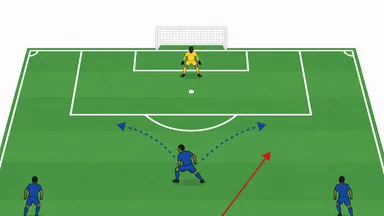
The third fix involves the full-backs. Deschamps can instruct them to step up and compress space when the opposition tries to build from the back. This reduces the distance Mbappé needs to cover to press. It also forces the opposition to play longer passes, which France’s center-backs can intercept. Theo Hernández, France’s left-back, is comfortable stepping into midfield, but he must be disciplined about when to push up. A high line carries the risk of being caught in behind, but Deschamps has shown a willingness to take calculated risks.
All three fixes have been tested briefly in Nations League matches. None has been used for a full 90 minutes against top opposition. Deschamps will need to commit to one approach and drill it thoroughly in the months before the World Cup. The margin for error in a tournament is small.
France’s 2026 Shape Depends on a Single Adjustment
The clearest tactical fix is to shift defensive responsibility to another forward. If Mbappé stays central, the right-winger must cover more ground. Ousmane Dembélé, the likely starter on the right, has a mixed defensive work rate. When motivated, he can track back effectively, but his consistency has been questioned by multiple managers. Randal Kolo Muani offers more defensive effort but less goal threat from wide positions. Deschamps may need to choose between attacking potency and defensive balance.
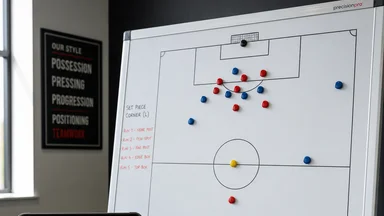
Another option is to switch to a 4-4-2 diamond, a formation Deschamps has used in friendlies and occasionally in competitive matches. In that shape, Mbappé would play as one of two strikers, with a narrow midfield four. The diamond allows the central midfielders to press higher while the full-backs provide width. But it also leaves the flanks exposed if the opposition uses wide attackers. France tested a narrow midfield in March 2025 friendlies, with Adrien Rabiot playing as a left-sided ball-winner. The results were mixed: France controlled the center but struggled against teams that switched play quickly.
A third possibility is to drop Mbappé into a left-midfield role when France does not have the ball. That would ask him to track the opposition’s right-back, a task he performed well at PSG. When possession is regained, he would push forward into his natural attacking position. This dual role requires high tactical discipline, but it preserves his defensive contribution without sacrificing his attacking threat. Deschamps has not used this approach extensively, but it has been discussed in French media as a potential solution.
Whichever adjustment Deschamps chooses, it must be tested before the tournament. The Nations League matches in 2025 offer a chance to experiment. France’s group-stage opponents in 2026 will include teams that press high and teams that defend deep. A rigid shape could be exploited. Deschamps has time, but he does not have unlimited options. The adjustment must be simple enough for players to execute under pressure.
Real Madrid’s Injury Record Adds Uncertainty
Mbappé’s physical condition is another variable. At 27, he is entering the age range where muscle injuries become more common for players who rely on speed. Real Madrid’s medical staff have managed his minutes carefully, but the World Cup will require him to play multiple high-intensity matches in a short period. France’s medical team will have a pre-tournament conditioning plan. They may reduce Mbappé’s workload in the weeks before the tournament to ensure he is fresh. But that approach carries its own risks: if Mbappé lacks match sharpness, his timing on defensive actions could be off. The history of star players declining after 27 is not encouraging. Players like Ronaldinho, Kaká, and even Cristiano Ronaldo saw their defensive contributions drop significantly in their late twenties. Mbappé’s decline is still modest, but the trend is clear.
There is also the psychological factor. Mbappé has been linked with a move away from Real Madrid in the summer of 2026, and the transfer speculation could be a distraction. Deschamps will need to manage the squad’s focus, especially if the media narrative around Mbappé’s future becomes intense. France’s senior players, such as Hugo Lloris and Antoine Griezmann (if he returns), have experience handling such situations, but the squad is younger now.
Despite these concerns, Mbappé remains France’s most important player. His attacking output alone justifies his place in the starting XI. The question is whether Deschamps can build a defensive structure that compensates for his reduced work rate. The answer will likely determine France’s fate in 2026.
The Risk of Over-Reliance on One Player
Mbappé’s attacking output remains elite. But his defensive drop forces his teammates to run more. If Tchouameni picks up a suspension in the knockout stages, France’s midfield balance could collapse. France’s bench does not offer a clear solution. Kingsley Coman is a direct replacement on the wing, but his defensive work rate is also inconsistent. Marcus Thuram has played as a central striker but lacks Mbappé’s goal threat. The squad depth at forward is strong, but none of the alternatives replicate Mbappé’s combination of speed and finishing. Deschamps may be forced to keep Mbappé on the pitch even if his defensive contribution is low, simply because the attacking downgrade is too steep.
The group stage could expose the imbalance early. If France faces a team that presses high and forces Mbappé to defend deep, his energy levels could drop in the second half. That could lead to injuries or reduced effectiveness in attack. Deschamps will need to manage substitutions carefully, perhaps using one of his three changes to bring on a defensive forward if France is protecting a lead.
Some observers, such as French football writer Julien Laurens, argue that the concern is overblown. France still has one of the best defenses in the world, with Dayot Upamecano, Ibrahima Konaté, and Jules Koundé. The midfield is deep, with Eduardo Camavinga and Youssouf Fofana as options. But the 2026 tournament will feature teams that are tactically sophisticated. A single weakness can be exploited repeatedly. Deschamps knows this better than most.
What Data Says About Title-Winning Pressing Patterns
The data from recent World Cups underscores the importance of defensive work from forwards. The last three winners—Germany 2014, France 2018, and Argentina 2022—all ranked in the top five for pressing intensity. France in 2018 ranked second in defensive duels won per match, behind only Croatia. Argentina in 2022 pressed more in the final third than any other team, with Lionel Messi contributing a surprising number of defensive actions for a player his age.
Mbappé’s current defensive duel rate of around 1.6 per 90 would rank near the bottom among forwards at the 2022 World Cup. Only a handful of players registered fewer duels. That is not a fatal statistic on its own, but it becomes problematic when combined with France’s overall pressing strategy. If the team’s best player does not press, the collective intensity drops. Opponents have more time on the ball, and they can pick passes more easily.
France’s 2018 success was built on a high press that forced turnovers in dangerous areas. The team’s average defensive action height was among the highest in the tournament. In 2022, that number dropped slightly, and France conceded more chances in transition. The trend is moving in the wrong direction. Without a correction, France could exit in the quarterfinals against a well-organized opponent.
Deschamps has acknowledged the importance of pressing in interviews, but he has also defended Mbappé’s role. He points out that Mbappé’s positioning forces defenders to stay deep, which creates space for midfielders. That is true, but it is a trade-off. The question is whether the trade-off is worth it in knockout football, where one mistake can end the tournament. The data suggests that teams that press effectively win more often. France will need to find a way to press effectively while accommodating Mbappé’s reduced defensive workload.
Whether Deschamps can strike that balance remains uncertain. If he succeeds, France will be a formidable contender. If not, the team may fall short of expectations, leaving analysts to debate what might have been.
For a deeper look at how other star players are reshaping their national teams’ attacking structures, read our analysis on Vinícius Júnior’s wide isolation shift and how Brazil is adapting. Also, the loss of Griezmann’s half-space connections has already slowed France’s build-up, compounding the defensive issue.