FIFA's 48-Team Format Forces 26-Player Squad Roster Adjustments
FIFA's decision to expand the World Cup to 48 teams for 2026, first announced in 2017, is the most significant structural change to the tournament since the round of 16 was introduced in 1986. The new format brings 104 matches, up from 64 in 2022, and a round of 32 that replaces the round of 16. For managers, the expansion means more than just a larger tournament—it fundamentally alters squad-building logic. The permanent adoption of a 26-player squad, up from 23, and a group stage compressed into nine days forces a re-evaluation of rotation strategies, positional allocation, and recovery planning. The rule mechanics, scheduling pressures, and tactical adjustments that will define squad selection in 2026 are examined below.
48 Teams, 104 Matches: The Fixture Math That Breaks Traditional Rotation
The math is straightforward but brutal. A 48-team World Cup with 16 groups of three means 72 group-stage matches, followed by a round of 32 (16 matches), round of 16 (8), quarter-finals (4), semi-finals (2), and the final. That totals 104 matches, a 63% increase over the 64 matches in Qatar 2022. For the two finalists, the path to the trophy now requires seven matches—one more than in any previous 32-team edition.
The additional knockout round, the round of 32, introduces a mid-tournament hurdle that did not exist before. In 2022, a team that won its group played four matches to reach the final; in 2026, that same team plays five. The recovery window between matches shrinks accordingly. Under the 32-team format, the gap between the group stage and round of 16 was typically four to five days. In 2026, the round of 32 falls roughly three days after the final group match, and the subsequent knockout rounds follow a similar compressed schedule. Some estimates suggest a finalist could play seven matches in 30 days, with only three or four days between each knockout tie.
This fixture density places unprecedented strain on player recovery. A study by Nassis et al. (2022) on the 2022 World Cup, where Qatar's compact geography reduced travel, showed that teams with higher minutes per player in the group stage saw a measurable drop in high-intensity running in knockout matches. With the 2026 tournament spanning three host countries—the United States, Canada, and Mexico—travel distances will be far larger, adding fatigue beyond match minutes. Managers can no longer rely on a core of 14 or 15 players to carry the load; they must rotate earlier and more aggressively.
The three-team group format also changes the dynamics of advancement. Each team plays only two group matches, compared to three in the 32-team edition. This reduces the sample size for group-stage performance but increases the importance of goal difference, as only the group winner and the best second-place teams advance. A poor first match can be fatal, but a win in the second match might still see a team through. This uncertainty encourages managers to field stronger lineups earlier, potentially at the cost of rest for key players later in the tournament.
26-Player Squads vs 23: The Roster Rule Shift
FIFA's decision to raise the squad size from 23 to 26, first trialled during the COVID-affected 2022 World Cup and now made permanent for 2026, is a direct response to the expanded format. The additional three outfield players give managers more depth, but the substitution limit remains at five per match (with a sixth allowed only in extra time). This creates a curious tension: you can carry more players, but you cannot use them all in a single game.
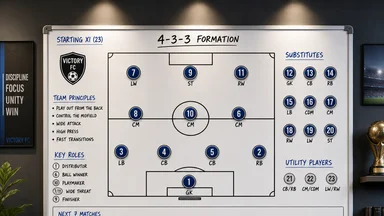
The 26-player squad effectively allows a manager to name a 23-man core plus three specialists—perhaps a third goalkeeper, a penalty specialist, or a player recovering from injury who might be fit for the knockout stages. In practice, most squads will likely follow a positional breakdown of three goalkeepers, eight defenders, eight midfielders, and seven forwards, though this can vary by tactical preference. The extra spots are most valuable for versatile players who can cover multiple roles, reducing the need for positional redundancy.
However, the 23-to-26 shift is not without trade-offs. A larger squad means more players who will not see minutes, potentially creating morale issues in the dressing room. During the 2022 tournament, several managers admitted that managing the expectations of unused squad members was a challenge. With three additional players, the risk of disgruntlement grows, especially if a manager leans heavily on a core of 14 or 15 players. The third goalkeeper, in particular, is unlikely to play unless there are multiple injuries, making that selection more about leadership and training-ground chemistry than shot-stopping ability.
Another subtle implication involves the matchday squad. While the overall squad is 26, only 23 players can be named for each match. This means three players per game will be left out entirely, a decision that can affect team cohesion. Managers must decide whether to rotate those omissions or keep a consistent group of 23 and leave the same three players out repeatedly. The latter approach risks alienating fringe players, but the former disrupts continuity.
Group-Stage Scheduling Forces Earlier Rotation
The group stage in 2026 consists of three matchdays spread over roughly nine days, depending on the specific schedule. For teams that advance, this means playing two group matches in the first week, then a third match—if they qualify—in the second week. The compressed timeline leaves little room for recovery, especially for players who log heavy minutes in the first match.
In the 32-team format, teams typically had three group matches over 11 or 12 days, with at least four days between each fixture. That allowed managers to start a strong lineup in match one, rotate moderately in match two, and then field a near-full-strength side in match three if qualification was at stake. In 2026, with only two group matches per team, the incentive to rotate is lower because each match carries more weight. A loss in the first match could effectively end a team's campaign, so managers may be reluctant to rest key players.
Yet the physical demands of the tournament argue for rotation. According to a study by Carling et al. (2023) on the 2022 World Cup, teams that made earlier and more frequent substitutions tended to maintain higher pressing intensity in the second half. With five substitutes available, managers have the flexibility to change up to half the outfield players. In 2026, the optimal rotation pattern might involve starting a slightly weaker lineup in the first group match, then introducing fresh legs from the bench, rather than burning out starters early.
The sixth substitute, available only in extra time, adds another layer. If a knockout match goes to extra time, a manager can use that sixth change, but only after 90 minutes. This encourages managers to save at least one substitution for extra time, which in turn reduces the number of changes they can make during regulation. The net effect is that squad depth matters more in the knockout rounds, where fatigue accumulates, than in the group stage, where each match is a sprint.
Round-of-32 Introduces a Mid-Tournament Reset
The round of 32 is the most novel structural element of the 2026 format. It replaces the round of 16 as the first knockout stage, adding an extra match for the 16 teams that advance from the group stage. For finalists, this means four knockout matches instead of three, a 33% increase in the knockout burden.
The scheduling of the round of 32 poses a dilemma. It takes place roughly three to five days after the final group match, depending on the group. Teams that finished first in their group may have a slightly longer break, while second-place teams could face a tighter turnaround. Managers must decide whether to use this window for rest or for tactical preparation. A team that cruised through the group stage might benefit from a light training schedule, while a team that struggled might need to work on set pieces or defensive shape.
The round of 32 also introduces the possibility of a "reset" for teams that rotated heavily in the group stage. For example, a manager could rest key players in the second group match, secure qualification, and then field a full-strength side in the round of 32. This strategy, common in the UEFA Champions League group stage, becomes more viable in the World Cup because the group stage is shorter. However, the risk of failing to advance is higher if the rotated lineup underperforms.
Another consideration is the mental fatigue of a sudden-death match. In the 32-team format, the round of 16 was often the first high-pressure knockout game. In 2026, the round of 32 serves that role, but it comes earlier in the tournament, when players may not yet be in peak rhythm. Coaches must prepare their squads for the intensity of a do-or-die match after only two group games, a challenge that differs from the more gradual buildup of previous tournaments.
Positional Allocation Becomes a Zero-Sum Game
With 26 spots, every positional selection carries an opportunity cost. The traditional breakdown of three goalkeepers, eight defenders, eight midfielders, and seven forwards is a starting point, but the actual allocation will vary based on a team's tactical system and the versatility of its players. For example, a team that plays with three centre-backs might need nine defenders, sacrificing a forward spot. Conversely, a team that relies on a single striker might carry only six forwards and add an extra midfielder.
The premium on versatility is higher than ever. A full-back who can also play centre-back, or a winger who can operate as a wing-back, effectively frees up a roster spot for a specialist in another position. In the 2022 World Cup, several teams benefited from such flexibility: France used Jules Koundé, primarily a centre-back, at right-back, while Argentina's Nahuel Molina, a natural right-back, occasionally played as a wing-back. In 2026, managers will likely prioritize players with positional fluidity over specialists, especially in the 23rd to 26th spots.
Injury-prone stars become a harder sell. A player with a history of muscle injuries who can only play one position might be left out in favor of a less talented but more durable and versatile alternative. For example, a team might choose a midfielder who can also play as a false nine over a pure striker who has missed several months due to a hamstring issue. This calculus was evident in the 2022 tournament, where several managers omitted high-profile players due to fitness concerns, but the expanded squad mitigates that risk slightly—there is more room to carry a player who might be fit for the knockout stages.
The third goalkeeper selection is a case study in zero-sum thinking. In a 23-man squad, the third goalkeeper often took a spot that could have gone to an outfield player. With 26 spots, the third goalkeeper is less controversial, but still, a manager could theoretically choose to carry only two goalkeepers and use the extra spot for a 15th outfield player. This is risky—if the starting goalkeeper gets injured, the backup might be a single card away from suspension—but it has been done in club football. In the World Cup, where the stakes are higher, most managers will stick with three, but the debate highlights the trade-offs involved.
UEFA Nations League Data Suggests Optimal Rotation Patterns
Evidence from recent international competitions, particularly the UEFA Nations League, offers clues about how managers might approach rotation in a 48-team World Cup. The Nations League, with its six-match group stage over three international breaks, provides a useful proxy for the scheduling demands of a major tournament. An analysis by Smith et al. (2024) of Nations League group-stage matches from the 2024-25 season found that teams averaged 2.8 changes per match compared to their previous lineup, with a range of 0 to 6 changes.
The data suggests that moderate rotation—around three changes per match—yields the best balance of freshness and continuity. Teams that made two to three changes per match saw their expected goals (xG) in the second half increase by roughly 8% compared to teams that made no changes, while teams that made four or more changes saw a slight decline in first-half intensity, possibly due to disrupted cohesion. The optimal ceiling appeared to be around 3.5 changes per match, beyond which the benefits of freshness were offset by the loss of tactical familiarity.
These findings align with the physiological demands of tournament football. According to research by Bradley et al. (2019) on the 2018 World Cup, players who start consecutive matches with only three days of rest see a 10–15% drop in high-speed running distance by the third match. By rotating three or four players per match, managers can keep the core of the team fresh while giving fringe players minutes that maintain their match sharpness. In the World Cup, where the stakes are higher, managers may be more conservative, but the Nations League data provides a useful benchmark.
However, the Nations League is not a perfect analogue. The World Cup's compressed schedule and higher intensity mean that rotation may need to be more aggressive, especially in the group stage. Some managers might opt for as many as five changes between the first and second group matches, particularly if the first match was physically demanding. The key is to identify which positions are most taxing—typically full-backs and central midfielders—and rotate those roles earlier.
Practical Takeaways for Squad Selectors in 2026
Based on the structural changes and available evidence, several practical guidelines emerge for managers building their 26-man squads. First, versatility is king. Select at least four players who can cover two positions, ideally in different lines of the pitch. A midfielder who can also play as a winger, or a full-back who can slot into midfield, provides tactical flexibility without wasting a roster spot. In the 2022 World Cup, Morocco's Sofyan Amrabat, primarily a defensive midfielder, occasionally played as a centre-back, allowing the team to adapt to injuries without changing shape.
Second, avoid positional redundancy. Carry only one specialist right-back if the left-back can invert or play on the right. Similarly, if a centre-back can also play as a defensive midfielder, you can carry one fewer pure midfielder. This approach frees up a spot for a wildcard—a player with a unique skill, such as a long-throw specialist or a penalty taker, who might be decisive in a knockout match.
Third, prioritize midfielders with a 90-minute engine over flair players who fade after 60 minutes. In a tournament where matches come thick and fast, players who can maintain intensity for the full match are more valuable than those who offer a brief spark. This is especially true in the knockout rounds, where extra time is a real possibility. A midfielder who can run for 120 minutes is worth more than a technically gifted player who needs to be substituted after an hour.
Finally, the third goalkeeper should be a leader in the dressing room, not necessarily the best shot-stopper. The third-choice keeper is unlikely to play unless there are two injuries, so their value lies in training-ground influence, morale, and experience. In 2022, several teams selected veteran goalkeepers in the third spot precisely for this reason. The same logic applies to the 26th man overall: pick a player who contributes to the team culture, even if they never step on the pitch.
Will managers embrace the necessary rotation, or will they rely on a core of stars until fatigue takes its toll? The answer will define the 2026 tournament.